
Forestry assets of LGPS fund expand
In a significant move towards sustainability, the South Yorkshire Pensions Authority (SYPA) has announced that forestry is a key component of its natural capital allocation, as part of its journey towards net zero emissions. This strategy is supported by the authority's aim to reach net zero by 2030.
SYPA's forestry investments are not only a response to climate change but also a commitment to enhancing biodiversity, as confirmed by the authority's director, George Graham. The pension scheme members have expressed their appreciation for these efforts, demonstrating a shared commitment to the cause.
SYPA has partnered with Campbell Global, a part of J.P. Morgan Asset Management, for its forestry investments. Campbell Global's strategy focuses on global forestry assets that not only sequester carbon but also generate instruments for the reduction or removal of greenhouse gases.
The growing interest in natural capital strategies, such as forestry investments, is evident in the market. According to a recent survey, 99% of institutional investors actively engaged in nature-based investments plan to increase their allocations. This shift in sentiment is driven by a balance between risk management and financial returns, with nearly half of investors now citing financial returns as a key motivation.
However, the natural capital investment landscape remains fragmented, with inconsistent frameworks and information gaps. This can undermine confidence and slow the flow of capital. Some investors may hesitate until clearer standards and data become available.
Despite these challenges, the sector is maturing rapidly. Major players like BlackRock and Goldman Sachs have launched new funds specifically targeting natural capital, including biodiversity and forestry. The need to close the “nature finance gap” is driving innovation and increased private sector involvement.
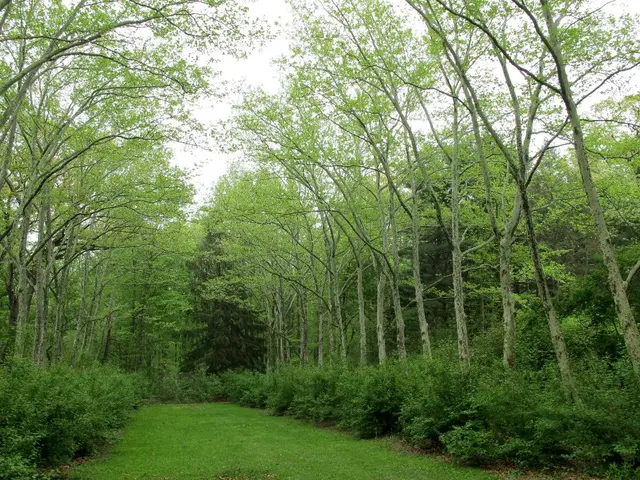
Forestry is increasingly seen as critical infrastructure for both net zero and biodiversity goals. New financial instruments and improved tracking of environmental outcomes are helping to make forestry and other natural capital investments more measurable and mainstream.
It is worth noting that SYPA is not solely relying on forestry investments to achieve its goals. The authority has already allocated £50m to a forestry fund managed by Gresham House, and it is part of the Border to Coast pool. Gresham House has undertaken acquisitions in Scotland and Wales.
In conclusion, investors active in natural capital strategies, such as SYPA, are increasingly viewing these investments as viable financial opportunities, not just ethical or regulatory obligations. While some caution persists due to market fragmentation and data gaps, the sector is maturing rapidly, with leading institutional investors recognising natural capital not as an externality, but as a core asset class and strategic imperative for long-term value creation.
- SYPA's partnership with Campbell Global, with its focus on global forestry assets that sequester carbon and generate instruments for greenhouse gas reduction, aligns their forestry investments with both science ( carbon sequestration by forests ) and finance ( generating financial returns through investments ).
- The growing enthusiasm among institutional investors for natural capital strategies like forestry investments, as demonstrated by the 99% intending to increase allocations, reflects a shift in investment thinking that values environmental-science ( biodiversity, carbon sequestration ) as much as finance ( financial returns ).