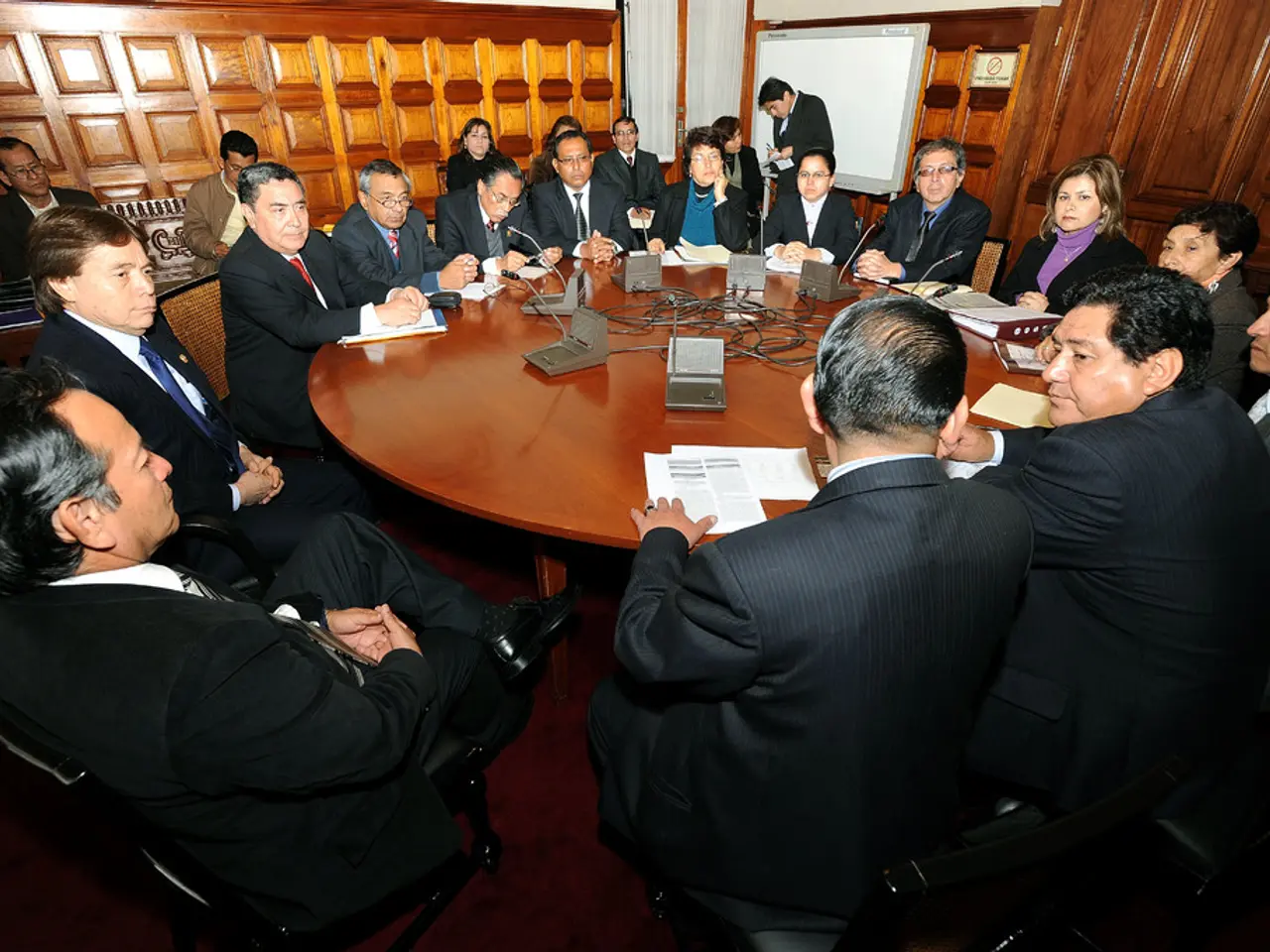
Gathering at Merz - Business venture named 'Made in Germany'
Under the leadership of Chancellor Friedrich Merz, Germany is embarking on an ambitious economic recovery and revitalization plan, with the "Made for Germany" initiative playing a pivotal role. This initiative forms part of a broader strategic framework, involving a significant investment push to modernize Germany’s industrial base, infrastructure, energy systems, and digital economy.
The government has unveiled a €150 billion growth package within an overall €500 billion infrastructure and stimulus plan. The focus of the initiative is on sectors such as infrastructure development, energy transition, and digitalization, supporting projects like rail electrification, smart grids, hydrogen-ready gas pipelines, and high-voltage transmission technologies.
A crucial component is the Climate and Transformation Fund (KTF) worth €100 billion, which drives investments in renewables integration and industrial decarbonization. Companies like Siemens Energy and Nordex are set to play strategic roles in the recovery.
Sixty-one German companies, including Deutsche Bank, Siemens, Axel Springer, and FGS Global, have collectively pledged to invest more than €600 billion in Germany over the next three years. This corporate investment initiative amounts to about €300 billion, complementing government spending.
The investments will be used for new locations and facilities, research and development, and modernization of infrastructure within Germany. Notably, only a part of the necessary investments can be made by the state, with a significant part needing to come from the private sector.
The investments are a response to Germany's potential third year without economic growth. The Bundestag and Bundesrat have decided on a €500 billion special fund for additional state investments in infrastructure and climate protection.
The "Made for Germany" initiative was launched by Christian Sewing, CEO of Deutsche Bank, Roland Busch, CEO of Siemens, Mathias Döpfner, CEO of Axel Springer, and Alexander Geiser, CEO of FGS Global. The meeting at the Chancellery, where these announcements were made, was attended by around 30 companies, including more than a dozen DAX corporations.
The investments come as a powerful signal to international companies to invest more strongly in Germany, potentially changing the mood and contributing to bringing Germany onto a growth path. However, companies have long complained about bureaucracy, and it remains to be seen how this will be addressed as part of the wider reforms announced by Chancellor Merz.
The federal government has welcomed the investments, stating that they will contribute to more economic growth and the future viability of the location. The investments will be closely monitored to ensure they align with the strategic goals of the initiative and the broader economic recovery plan.
- The German government's €500 billion infrastructure and stimulus plan includes a €150 billion growth package, with a focus on sectors like infrastructure development, energy transition, and digitalization, and involves significant investments in areas such as rail electrification, smart grids, hydrogen-ready gas pipelines, and high-voltage transmission technologies.
- Sixty-one German companies, including Deutsche Bank, Siemens, Axel Springer, and FGS Global, have pledged to invest more than €600 billion in Germany over the next three years, complementing the government's spending on investments for new locations, facilities, research and development, and modernization of infrastructure within Germany.
- The investments made by German companies, such as Siemens Energy and Nordex, supported by the Climate and Transformation Fund (KTF), will play strategic roles in Germany's economic recovery and revitalization plan, particularly in the areas of renewables integration and industrial decarbonization.