
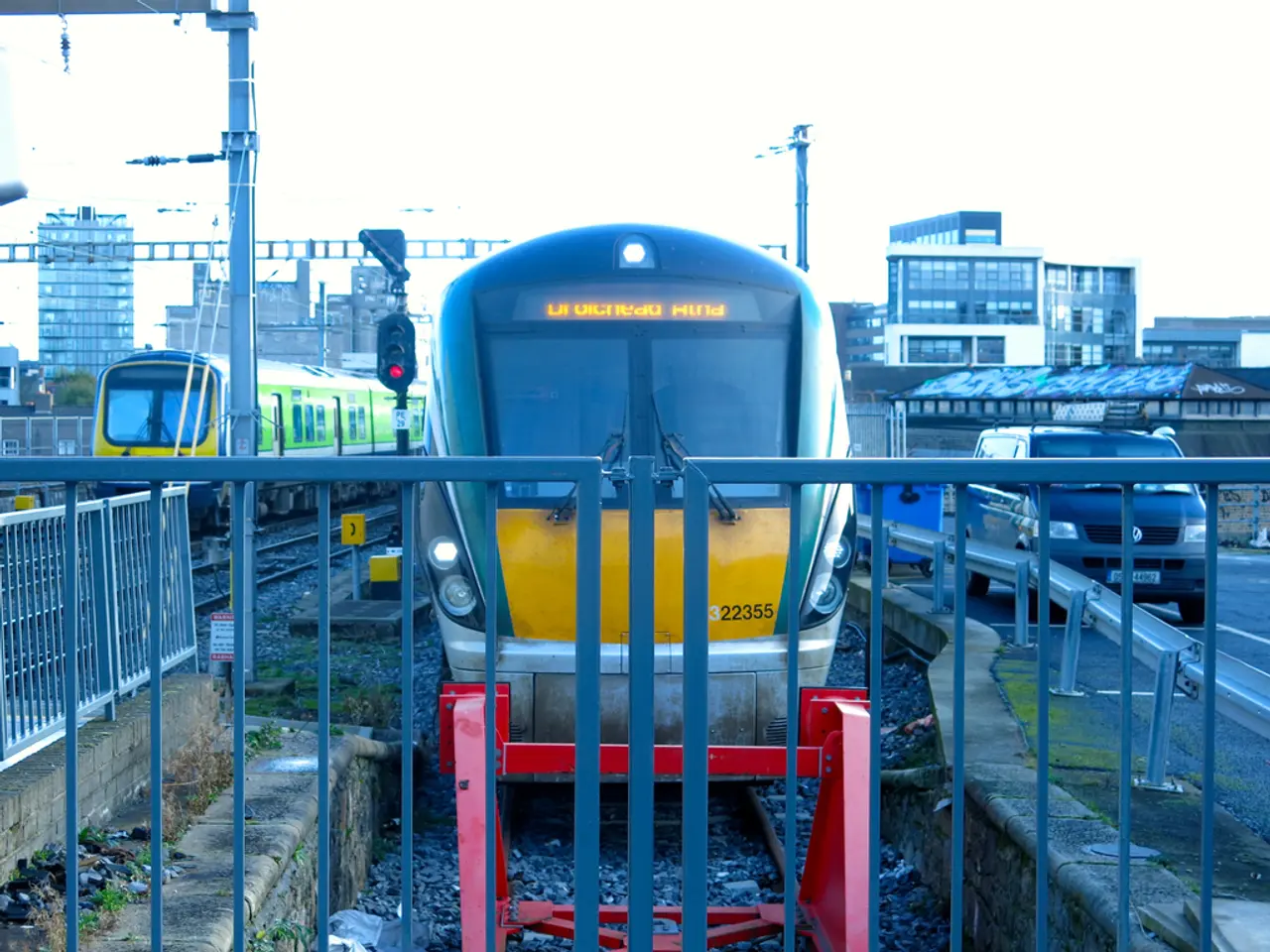
High-Speed Train Vision for Europe Faces Potential Collapse
European Railways: A Mixed Picture Ahead of Ambitious High-Speed Goals
The European Union (EU) has set ambitious targets to double high-speed rail traffic by 2030 and triple it by 2050, reflecting a strong commitment to sustainable transport and decarbonization. However, the current status of the rail network across the continent paints a picture of significant challenges in meeting these ambitious objectives.
Infrastructure Gaps Remain a Major Hurdle
Many EU countries are grappling with outdated or incompatible rail systems, featuring differing track gauges, signaling technology, and electrification standards. Harmonizing and upgrading these infrastructures across borders demands massive investment and time.
Investment Shortfalls and Uneven Funding Hinder Progress
While wealthier countries like Germany and France have advanced high-speed networks, several Eastern European countries lag behind due to budget constraints. Although EU funding mechanisms exist, such as the Connecting Europe Facility, demand for financing exceeds supply.
Cross-Border Integration Issues
Progress is uneven and complicated by national priorities, bureaucratic resistance, and regulatory differences. Conflicting national interests and protectionism slow coordination on cross-border routes.
Project Delays and Technical/Political Hurdles
Key projects like Rail Baltica are behind schedule and over budget. The Lyon-Turin and Brenner Base Tunnel projects face ongoing delays from environmental concerns, local opposition, or political changes.
Recent Progress, Yet Insufficient
Despite the challenges, recent progress has been made with new or improved cross-border connections and infrastructure expansions within member states. However, this is not yet sufficient to guarantee that the 2030 and 2050 goals will be met.
Urgent Need for Modernization, Funding, and Cooperation
To overcome current barriers and realize the targets of doubling traffic by 2030 and tripling it by 2050, significant infrastructure modernization, greater funding, and enhanced cooperation among member states are urgently needed.
Some of the European rail operators faced with challenges include Croatia's HZŽ, Denmark's DSB, Italy's Trenitalia, Luxembourg's CFL, Sweden's SJ, Portugal's CP, France's SNCF, Germany's Deutsche Bahn, Switzerland's SBB, Czechia's ČD, Finland's VR, Greece's Hellenic Railways, the Netherlands' NS, Spain's Renfe, and Romania's CFR. Each faces unique issues such as declining passenger numbers, frequent strikes, poor value-for-money, technical compatibility issues, and maintenance disruptions.
As the EU strives to meet its high-speed rail targets, addressing these challenges will be crucial to ensuring a sustainable, efficient, and integrated rail network that serves the needs of all its citizens.
[1] European Commission (2019). "TEN-T Annual Report 2018." [Online]. Available: https://ec.europa.eu/transport/sites/transport/files/tent_en.pdf
[3] European Parliament (2019). "Rapid response to the Commission communication on the European Rail Traffic Management System (ERTMS) and the European Rail Area." [Online]. Available: https://www.europarl.europa.eu/doceo/document/RC-9-2019-0267_EN.html
[5] European Commission (2017). "Railways in the EU: a dynamic sector in a changing world." [Online]. Available: https://ec.europa.eu/transport/sites/transport/files/2017-10-17_railways_in_the_eu_a_dynamic_sector_in_a_changing_world_en.pdf
- To achieve the EU's objective of doubling high-speed rail traffic by 2030, a substantial overhaul of outdated technology, such as Signaling Technology in various countries, is essential.
- The environmental science community has expressed concern about the potential impact of high-speed rail expansion on the environment, increasingly calling for sustainable practices in the industry.
- Given the projected growth in high-speed rail traffic, there is a growing need for investment in the finance sector to fund the necessary upgrades in rail infrastructure across Europe.
- The transportation industry could benefit significantly from technological advancements, like better energy-efficient trains and improved passenger information systems, to enhance efficiency and reduce the environmental footprint.
- Businesses across Europe may see opportunities in the high-speed rail sector, particularly in areas like maintenance, technology development, and operational consultation, as the industry modernizes and expands.




