
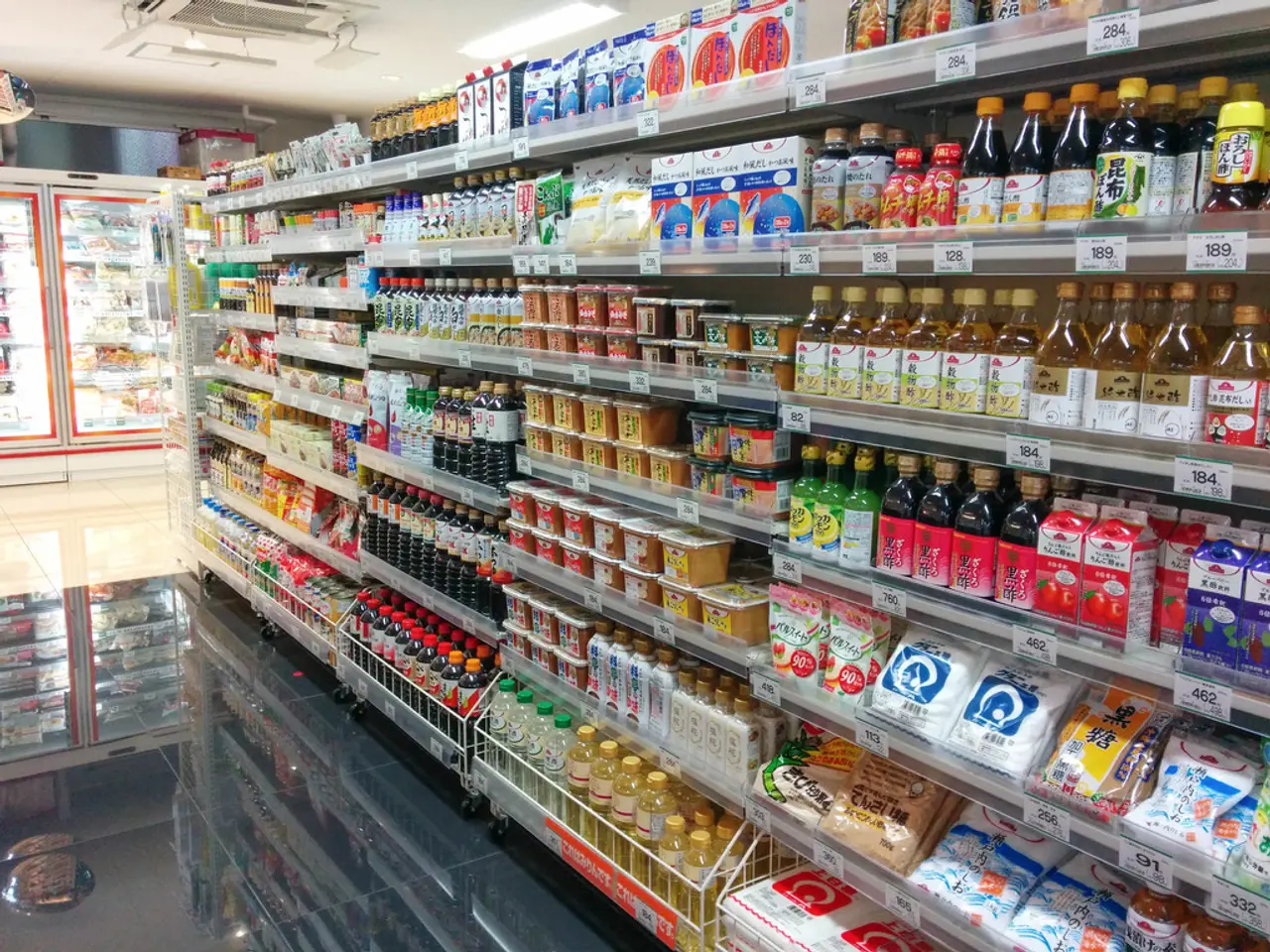
Lowering Taxes on Everyday Goods with GST 2.0: Over 75% of Rural Purchases and 66% of Urban Spending to be Classified Under 0% or 5% Tax Rate Starting from September 22
In a significant development, the Federation of Indian Chambers of Commerce & Industry (FICCI) and the Thought Arbitrage Research Institute (TARI) have released a study on the reorganization of Goods and Services Tax (GST) in India.
According to the study, under the new GST rates, often referred to as GST 2.0, everyday goods, especially those crucial for rural households, will primarily be either tax-free or taxed at a low 5% rate. This change is expected to have a substantial impact on rural and urban spending patterns.
Currently, about 29% of items have no GST, making up 36% of rural spending and 32% of urban spending. Under the new GST rates, this figure is set to increase significantly, with nearly 30% of items still having no tax, covering 36.5% of rural and 32.9% of urban spending.
From September 22, many more items will be in the 5% slab, over 40% of items. For city dwellers, about 66% of what they buy will be taxed at 0% or 5% under the new GST rates. This shift is particularly notable for rural households, as more than 75% of rural spending will attract either 0% or 5% tax.
On the other hand, high-tax items (28% and above) will shrink further, forming a tiny share of what households buy under the new system, accounting for only 0.5% of items and 0.2% of spending. The 12% GST slab will disappear entirely, and the 18% GST slab will cover fewer items and a smaller share of people's spending.
However, the study did not provide information about the GST rates for items other than 0% and 5%, or the impact of the new GST rates on the prices of goods. As the implementation of GST 2.0 approaches, it will be interesting to see how these factors unfold and how they may affect consumers and businesses alike.
Read also:
- The Cost of Speech is Zero, True Strength Lies in Unity
- Beginning a Food Truck Venture: Crucial Stages to Achieve Profitability
- Aiming to simplify the move towards cleaner automobiles, the newly established ministry plans to take direct action with Pannier-Runacher, Létard, and Vautrin at the helm.
- "The imperfect yet essential documentary, "Planet of the Humans," raises challenging and uncomfortable inquiries"




