
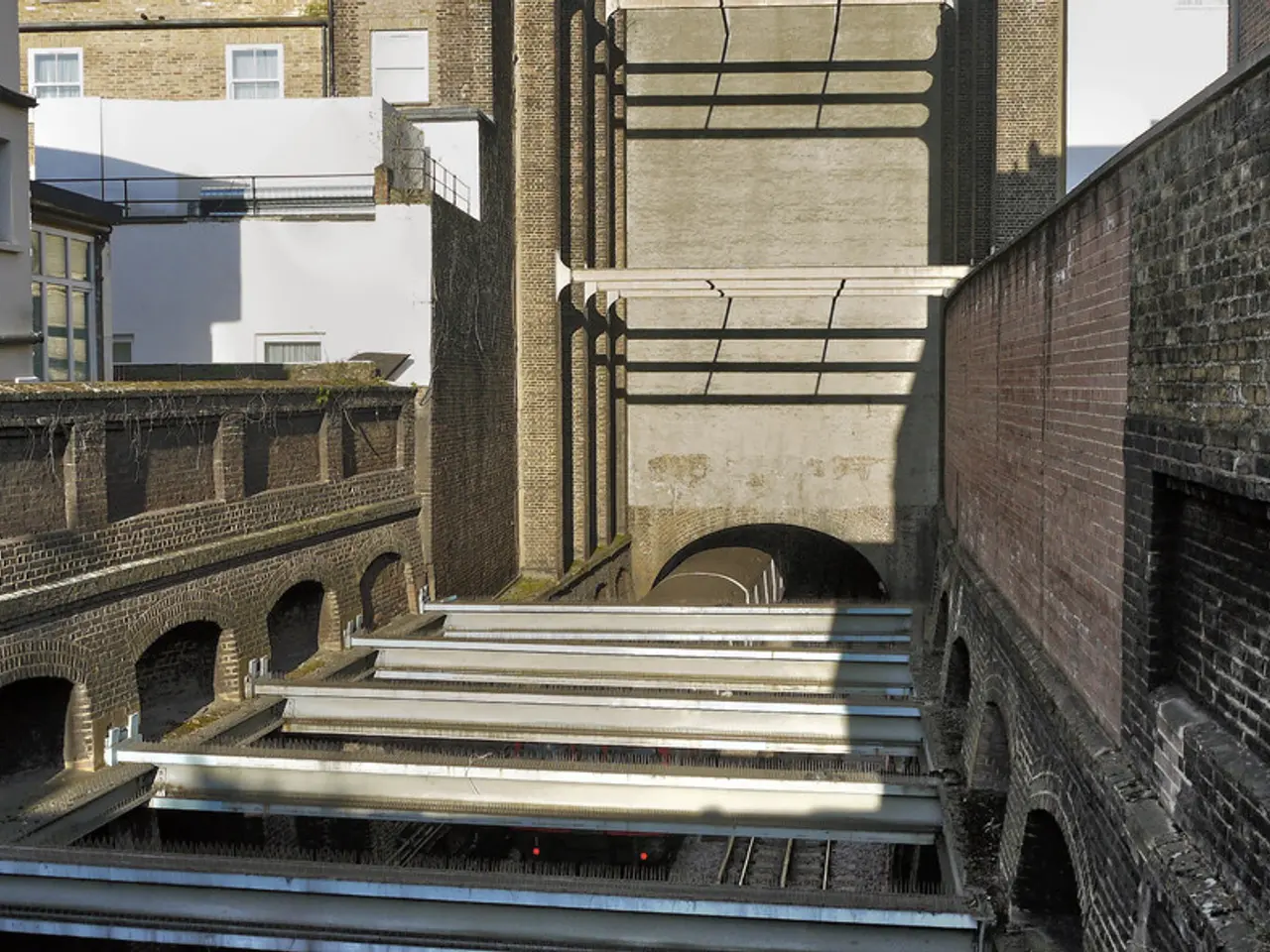
Pink Line's final tunnel is unveiled
The completion of the Rosa Line for Metro do Porto has been delayed due to challenging geological characteristics and complex geotechnical conditions of the terrain, particularly in the tunnel segment between Casa da Música and Galiza stations.
Tiago Braga, the president of Metro do Porto, attributed the delay to the technical difficulties caused by the complex geotechnical conditions. The work, which is approximately 3.5 kilometers long and entirely underground, required careful handling to ensure safety and structural integrity, thereby extending construction time.
The initial plan was to start commercial operation for the Rosa Line and the Ruby Line in July 2025, but due to these technical conditions, the opening has been pushed back to the first quarter of 2026.
The costs for the Pink and Yellow lines have increased to €511 million, reflecting both the technical complexity related to these geological challenges and broader factors like rising material costs.
Despite the delays, Tiago Braga emphasized the absence of serious accidents during the work and mentioned that everyone involved, including the Metro do Porto's own Board of Directors, is interested in finishing the work as quickly as possible, but safety is a priority.
Cristina Pinto Dias, the mayor of Porto, highlighted the transition from individual transport to collective transport, stating that it should provide added value, particularly in travel time. She also stressed the importance of meeting decarbonization targets, with 29% of transport energy to be renewable by 2030.
The Rosa Line, with a cost of 304.7 million euros, will connect to Casa da Música and São Bento stations, with intermediate stations at Hospital de Santo António and Praça da Galiza. The tunnel between Casa da Música and Galiza station has been completed, and the opening of a tunnel is considered the most relevant milestone of any geotechnical work.
In conclusion, this illustrates how underground metro projects are often subject to delays caused by the natural conditions beneath the surface, requiring adaptations in engineering approach. As the work on the Rosa Line becomes more controllable with fewer risks, the anticipation for its completion and the start of commercial operation continues to grow.
- Given the delays in the completion of the Rosa Line for Metro do Porto, it is evident that the complexity of the geotechnical conditions in the public-transit transportation industry has led to increased costs in projects like the Rosa Line, which now stands at €511 million.
- With the challenges in the finance sector due to rising material costs and the technical difficulties caused by complex geotechnical conditions, it is crucial for the industry to prioritize safety while ensuring a smooth transition to public-transit transportation, as highlighted by Cristina Pinto Dias, the mayor of Porto, who emphasizes the importance of meeting decarbonization targets.




