
Rail project guarantees a 10% amplification of natural life forms diversity
The East West Railway Company (EWR Co) has announced a significant milestone in their new rail link project, aiming for a 10% biodiversity net gain. This ambitious target is part of the company's commitment to minimising the environmental impact of the project.
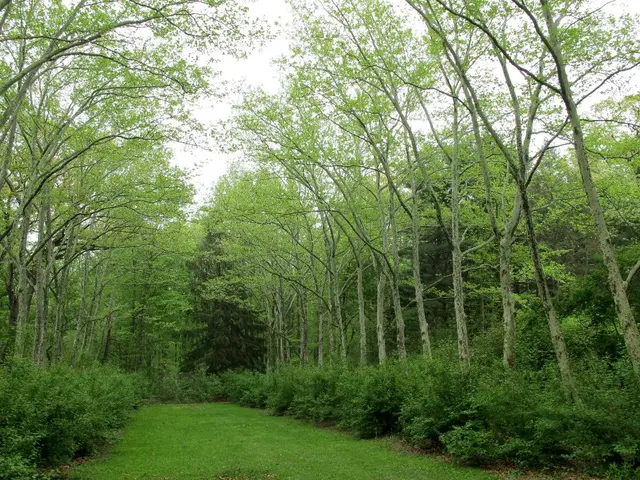
The company has transformed 20 Ecological Compensation Sites (ECSs) from low diversity, arable land into purpose-built wildlife havens. These sites, spread along the route from Bicester to Bletchley, provide habitats for a diverse range of species, including invertebrates, butterflies, birds, bats, reptiles, amphibians, otters, and badgers.
In collaboration with ecologists, engineering designers, and construction workers, the EWR Co has implemented environmental protection measures. This includes habitat preservation, noise reduction, and sustainable construction practices, particularly in Oxfordshire, Buckinghamshire, and Bedfordshire.
The success of these ECSs is evident, providing a sanctuary for endangered species and habitats associated with the East West Rail project, such as black poplar trees, the rare black hairstreak butterfly, and barbastelle bats, a Near Threatened species on the global IUCN Red List of Threatened Species.
Management plans are in place for all of the ECSs to ensure they continue to flourish for many years to come. Upon the project's completion, the ECSs will be returned to third-party landowners or Network Rail for maintenance.
The new rail link, known as the East West Rail project, connects East Anglia with Central, Southern, and Western England. In addition to the environmental efforts, the government has confirmed over £10m for the protection of vital transport services in Greater Manchester, including trams and trains.
EWR Co Director, Mark Cuzner, stated that reducing the project's environmental impact has been a crucial factor in designing and building the East West Rail. The company is committed to continuing environmental work along their new project.
This commitment to environmental sustainability sets a positive example for infrastructure projects, demonstrating that development and conservation can coexist.
Read also:
- More than half of British homes adhere to insulation standards established during the 1970s.
- While Éowyn's storm caused a massive €301 million in damages, fossil fuels maintain their position as the leading power source.
- Transition in Energy: Merz Administration Plans Enactment of Heating Revolution from 2026
- German Obsession with Luxury Vehicles Thriving Amid Traffic Congestion