
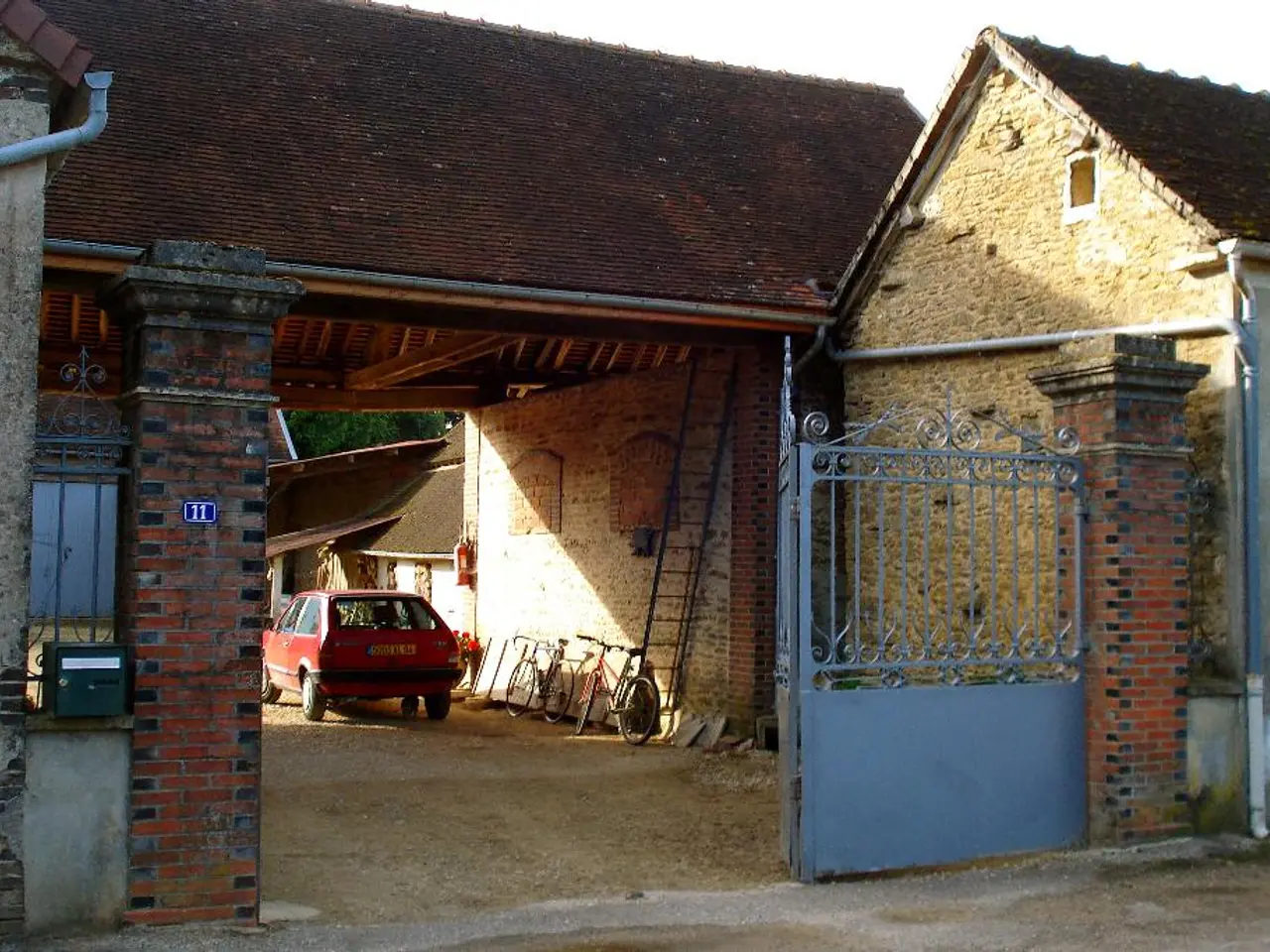
Residents might reap advantages from less stringent planning policies upon bill approval
In recent developments, the Permitted Development Rights (Extension) Bill has been tabled in the House of Lords, aiming to expand the rights for homeowners in England and Wales to carry out home improvements and extensions without the need for full planning permission. However, the exact changes and requirements of this bill for 2025 are yet to be detailed in the search results provided.
Currently, Permitted Development Rights (PDR) in England and Wales allow for certain home extensions and improvements without full planning permission, subject to size limits and conditions such as rear extensions up to 3-6 meters depending on house type, side extensions up to 3 meters, single-storey additions capped at certain height and footprint limits, and conditions on materials and proximity to boundaries.
The new bill, proposed by Lord Lucas, aims to extend these rights to facilitate homeowner renovations and address housing supply issues. The bill has passed its Second Reading in the House of Lords and will undergo detailed scrutiny, during which amendments can be proposed and debated.
Some concerns have been raised about the bill's potential consequences, particularly its impact on neighbours in densely populated areas. For instance, Lord Jamieson cautioned that a six-metre extension to a terraced home could materially impact its neighbours.
If passed, homeowners will be able to carry out a range of extensions, including side and rear extensions, as well as increasing the height of their roofs by up to one metre. However, the bill will not apply to listed buildings.
In addition, the bill allows for the construction of new stories on buildings in town centres, up to four stories high. Homeowners will also be able to install environmentally friendly upgrades, such as air source heat pumps, solar panels, and electric vehicle charging points.
Developments must not infringe on neighbours' rights, such as the right to light, nor obstruct rights of way or easements. Local planning authorities will retain some control over design requirements to ensure structural safety, energy efficiency, and sustainable drainage.
If building rules are relaxed, there will need to be a review of building control to ensure all aspects are covered. For homes in medium to high flood-risk areas, properties must be "well served by public transport" and incorporate flood resilience measures to qualify for relaxed planning rules.
For authoritative and up-to-date specifics on any new Permitted Development Rights (Extension) Bill in England and Wales, including changes to size limits, types of extensions allowed, or new conditions, consultation of official UK government sources such as the Planning Portal, MHCLG (Ministry of Housing, Communities and Local Government), or direct statutory instruments published after mid-2025 would be required.
Lord Lucas has called for a more balanced approach to planning deregulation and stronger building control measures, while emphasizing the importance of homeowners making homes flood-proof when expanding. If the bill successfully progresses through all parliamentary stages, the new planning reforms would come into effect six months after receiving royal assent.
In conclusion, the Permitted Development Rights (Extension) Bill is a significant proposal aimed at facilitating homeowner renovations in England and Wales, while maintaining a balance between homeowner rights and neighbouring property considerations. As the bill continues to be debated in the House of Lords, it is important to stay informed about any updates and changes to ensure compliance with the new regulations.
- Homeowners may extend their homes without full planning permission, subject to certain conditions, under the current Permitted Development Rights (PDR) in England and Wales.
- The Permitted Development Rights (Extension) Bill, proposed by Lord Lucas, aims to further expand these rights for homeowner renovations.
- With the new bill, homeowners can build side and rear extensions, increase roof heights by up to one meter, and install environmentally friendly features like solar panels and air source heat pumps.
- The bill also allows for the construction of new stories in town centers, but it does not apply to listed buildings.
- Developments must not infringe on neighbours' rights or obstruct rights of way, and local planning authorities will retain some control over design requirements.
- To stay updated on the changes and requirements of the Permitted Development Rights (Extension) Bill, consult official UK government sources like the Planning Portal, MHCLG, or statutory instruments published after mid-2025.




