UK retail prices showing a significant decrease, according to the British Retail Consortium's recent findings, reaching their lowest point since the year 2021.
In a significant development, the British Retail Consortium (BRC) has reported that UK retail price inflation fell to its lowest level in almost three years in June 2024. This decline is good news for shoppers, as it could help them plan their household budgets more effectively.
According to the BRC's data, annual inflation rates have dropped significantly across food and non-food categories. The Office for National Statistics Consumer Prices Index (CPI) came in at 2% in May, but the latest figures suggest a deceleration.
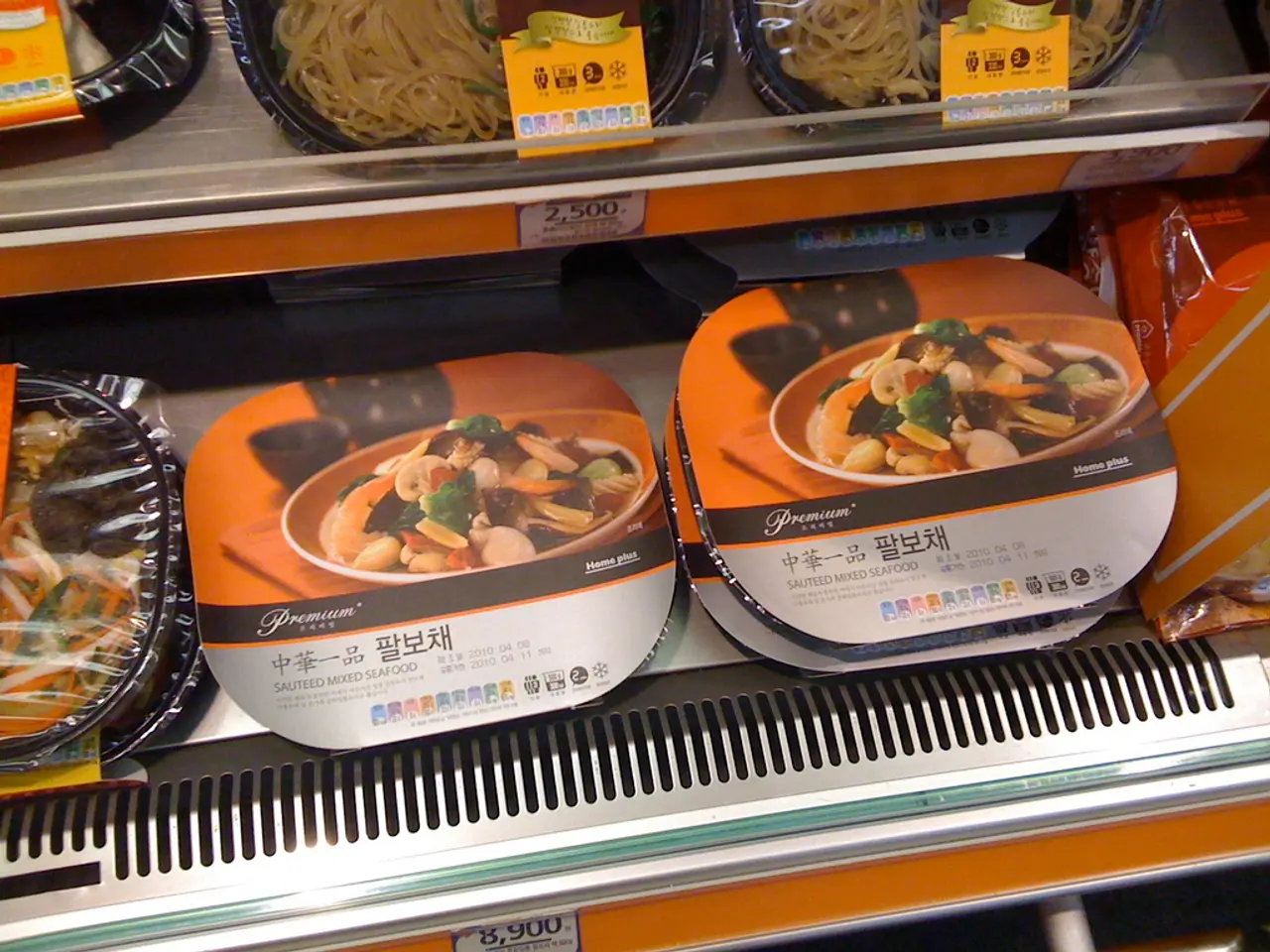
Food prices, however, continue to rise at a higher rate than headline inflation. The BRC figures show a 2.5% increase in food prices, which is a slight increase from the 2% rate in May. Despite this, the annual deceleration was led by fresh food, particularly butter, with chiller aisles seeing inflation tumble from 2% in May to 1.5% last month.
On a more positive note, ambient food prices increased by an average of 3.9% year-on-year in June, down from 4.8% in May. Month-on-month, prices actually dropped 0.1% for food.
Non-food prices also saw a decrease, with a 0.2% fall month-on-month. This decrease is more pronounced when compared to the 0.8% decrease in May, indicating a faster pace of deflation for non-food items.
Helen Dickinson, the BRC's chief executive, attributed the improving inflation figures to significant investment by its members. She also called on the winner of the next general election to better support her members in addressing major cost burdens such as the broken business rates system and inflexible apprenticeship levy.
The base rate was held at 5.25% at June's Monetary Policy Committee meeting. The next set of official ONS data is due out in a fortnight.
It's worth noting that after the most recent parliamentary elections, the Labour Party has taken power in Great Britain, with Keir Starmer as Prime Minister. Nigel Farage's right-wing party Reform UK is gaining influence but has not taken power.
The BRC believes that by addressing these cost burdens, retailers can invest in lower prices for the future, helping to reduce cost of living pressures for households. However, food is outpacing the headline CPI, which could be a concern for many households.
Mike Watkins, head of retailer and business insight at NielsenIQ, believes that the slowing inflation is a positive step. He stated that it should aid shoppers in planning their household budgets. The BRC also noted that TVs were subject to significant discounting, which could provide some relief to consumers.
Officials expect UK inflation to remain close to 2% over the coming months. This could provide some stability for consumers, allowing them to plan their finances more effectively. However, the ongoing situation will continue to be monitored closely.
Read also:
- The Cost of Speech is Zero, True Strength Lies in Unity
- Beginning a Food Truck Venture: Crucial Stages to Achieve Profitability
- Aiming to simplify the move towards cleaner automobiles, the newly established ministry plans to take direct action with Pannier-Runacher, Létard, and Vautrin at the helm.
- "The imperfect yet essential documentary, "Planet of the Humans," raises challenging and uncomfortable inquiries"